

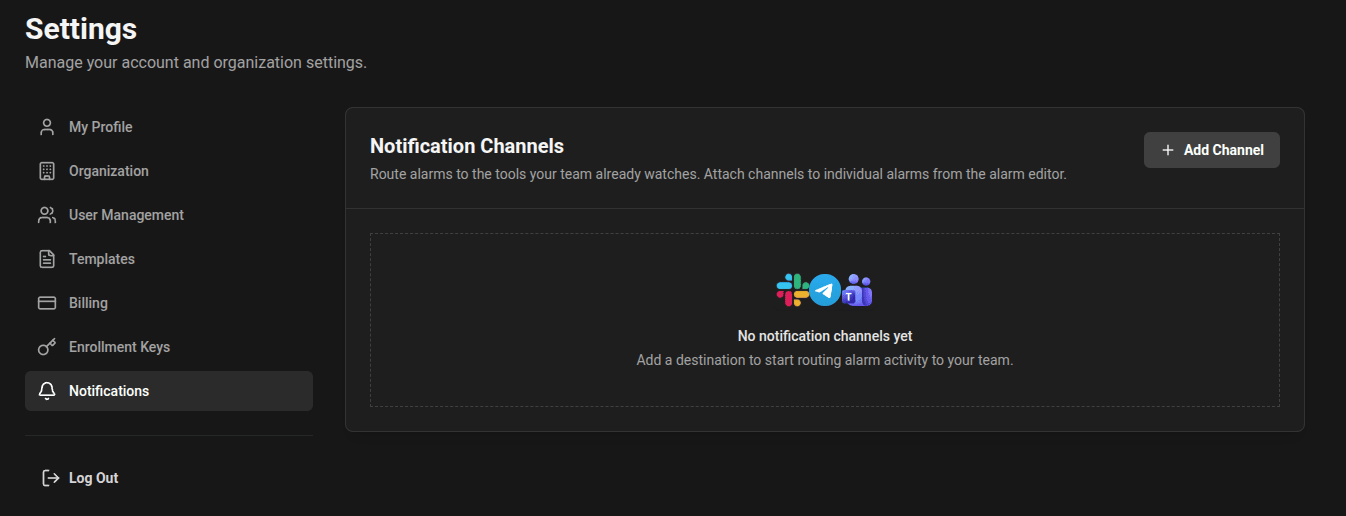
What you can do on this page
- Add channels for Slack, Telegram, and Microsoft Teams.
- Enable or disable channels without deleting them.
- Send test notifications to verify delivery.
- Edit channel names and notification behavior (such as resolve notifications).
- Remove channels no longer in use.
Supported channel types
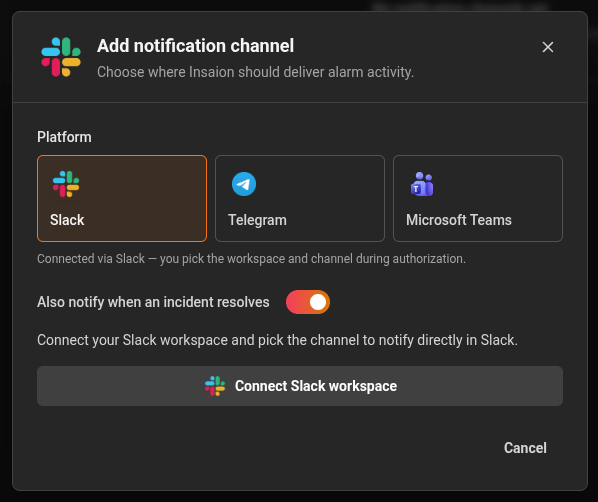
Slack
- Slack uses an authorization flow from the UI (Connect Slack workspace).
- During authorization, Slack lets you choose the workspace and channel destination.
- Once connected, the channel is ready for alarm notifications.
Telegram
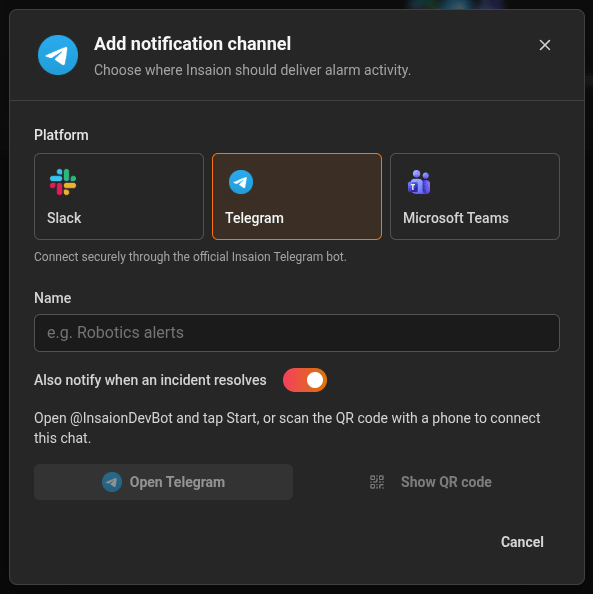
- Telegram uses the official Insaion bot connection flow.
- In the Add Channel modal, create a Telegram channel, then connect by opening Telegram or scanning the generated QR code.
- The connection link is time-limited and must be completed before it expires.
Microsoft Teams
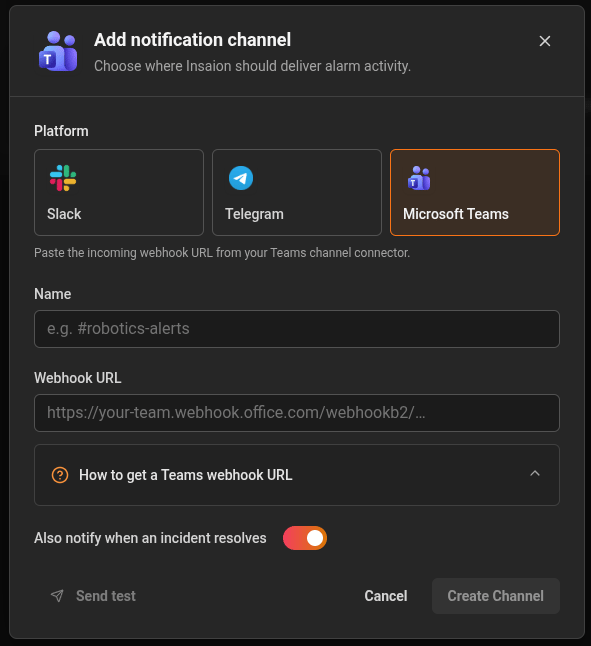
- Teams uses an incoming webhook URL configured from your target channel workflow.
- Paste the webhook URL in the channel form.
- Use Send test to validate that Teams receives the message before saving.
Channel settings
For each channel you can configure:- Name: friendly label shown in alarm configuration.
- Enabled state: quickly pause notifications to that destination.
- Notify on resolve: send a message when incidents transition back to OK.
- Test delivery: send a test message from the channel row or modal.
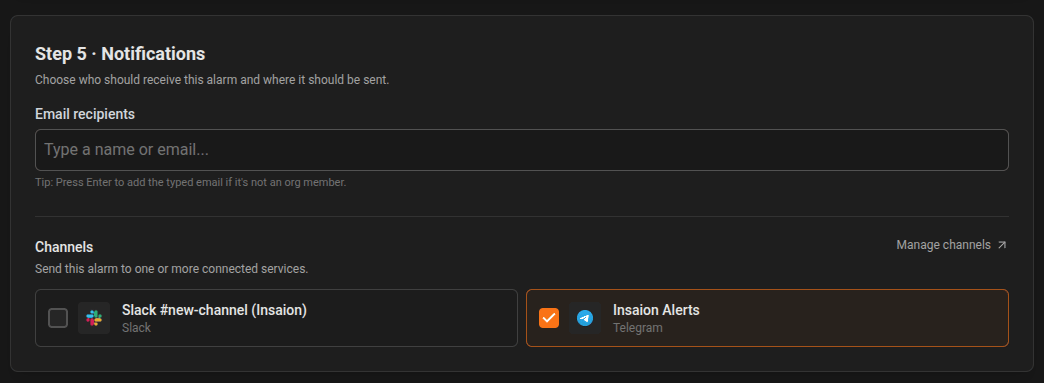
Attach channels to alarms
After channels are configured:- Open Alarms and create or edit a rule.
- In the Notifications section, select one or more channels.
- Save the alarm.
Operational notes
- Channels are organization-scoped and reusable across alarms.
- Disabling a channel preserves its configuration but stops message delivery.
- Deleting a channel removes it from future deliveries; alarms that referenced it continue to run without that destination.